


When companies grow, so do their challenges. Many small and medium-sized enterprises (SMEs) struggle with inefficient processes, fragmented tools, and the feeling of never having a complete overview. Accounting, warehousing, HR, and sales often run on separate systems, which not only costs time but also increases the risk of errors.
An ERP system can make a decisive difference here. It consolidates core business areas into a single platform, creates transparency, and reduces manual effort. Those who choose the right ERP provider lay the foundation for scalable growth, better decisions, and greater everyday efficiency.
But not every solution fits every company. In this article, we show which ERP systems are particularly suitable for SMEs, what to look for when selecting one, and which trends are shaping the market in 2025. We focus specifically on the requirements in Switzerland and the DACH region.
What Makes a Good ERP System
For SMEs in particular, it matters that the solution is not only functionally convincing but can also be implemented efficiently and operated long-term. What counts is not the range of features alone, but how well the system adapts to the company's actual processes and resources.
A good ERP system stands out through the following characteristics:
- Modularity and Scalability: Companies should be able to start small and expand the system step by step as needed — without technology changes or lengthy integration projects.
- Ease of Use: The interface must be clear and intuitive so that employees without an IT background can also work productively.
- Adaptability to Local Requirements: Swiss companies need features such as QR invoices, VAT-compliant accounting, or multilingual user interfaces.
- Cloud Options and Mobile Capability: Modern ERP systems offer flexible access options — in the office, on the go, or working from home. This facilitates collaboration and makes companies more responsive.
- Reliable Support and Local Partners: A good solution is only as strong as the ecosystem behind it. Local consulting, training, and support in the respective national language are a key criterion for many SMEs.
A modern ERP system impresses not only with its functionality but also with its technical strength: interfaces to existing tools, regular updates, the highest standards in data protection, and a transparent pricing structure ensure a sustainable and secure investment.
The Best ERP Systems for SMEs
Odoo
Odoo is an open-source ERP platform with a modular architecture. Companies can start with just a few functions, such as accounting or CRM, and gradually expand the system with modules for warehousing, projects, or HR.
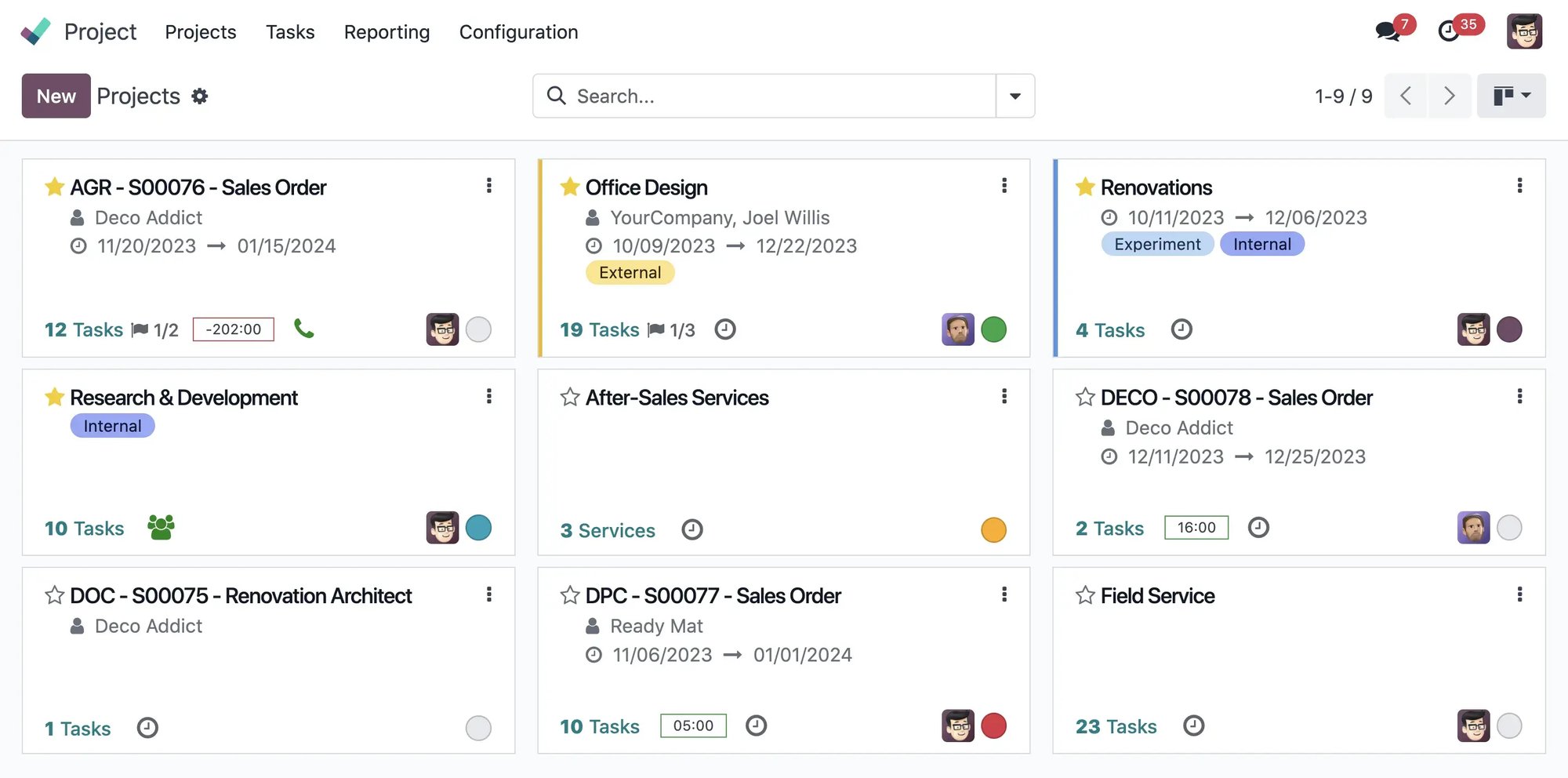
What makes Odoo so good?
- Modular structure, ideal for step-by-step expansion
- User-friendly interface with easy customizability
- Supports Swiss-specific requirements such as VAT, QR invoices, and charts of accounts
- Available as cloud or on-premise
- Very active partner network in Switzerland and worldwide
Who is it suitable for?
Odoo is suitable for growth-oriented SMEs looking for a flexible system that can grow with the company — ideal for digitally savvy service providers, startups, or manufacturing businesses with a manageable budget.
SAP Business One
SAP Business One is the SME-focused solution in the SAP portfolio. It covers all core processes such as finance, sales, warehousing, and manufacturing in a unified platform and offers a clearly structured data flow.
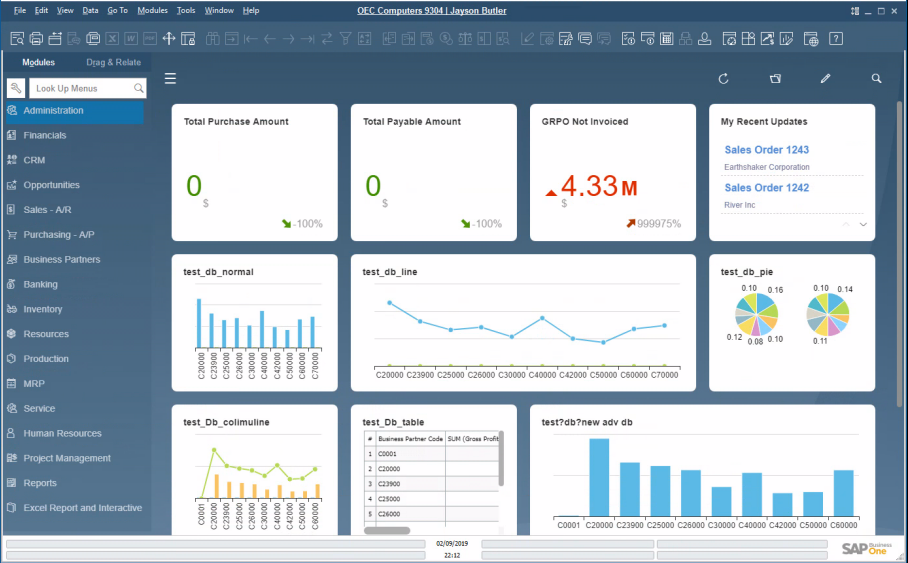
What makes SAP Business One so good?
- Very stable, particularly suited for structured process mapping
- Proven solution with high acceptance in the DACH region
- Good localization for regulatory requirements
- Supports more complex workflows in manufacturing
- Strong integration of reporting and analytics functions
Who is it suitable for?
Ideal for SMEs with medium to high process complexity, particularly in manufacturing or logistics-related sectors, that want to grow long-term and are looking for a robust, established solution.
Abacus
Abacus is an ERP system developed in Switzerland with a focus on local needs. The software covers accounting, payroll, time tracking, procurement, and order processing, among others — with strong legal compliance.
%208.38.02%20p.m..png?width=2000&height=1421&name=Captura%20de%20Pantalla%202026-01-19%20a%20la(s)%208.38.02%20p.m..png)
What makes Abacus so good?
- Fully aligned with Swiss standards and processes
- Integrated support for QR invoices, VAT, Swissdec & more
- Local support and strong market presence
- Mature features for SMEs in accounting, fiduciary, and HR
- Optional expansion with industry-specific solutions
Who is it suitable for?
Abacus is particularly suitable for Swiss SMEs that place great value on legal compliance and local support — e.g., service providers, administrations, or companies with a strong focus on HR and finance.
Microsoft Dynamics 365 Business Central
Business Central is Microsoft's cloud-based ERP system for SMEs and part of the Dynamics ecosystem. It connects finance, sales, procurement, and service with familiar Microsoft tools like Outlook, Excel, or Teams.
%208.40.20%20p.m..png?width=2000&height=1121&name=Captura%20de%20Pantalla%202026-01-19%20a%20la(s)%208.40.20%20p.m..png)
What makes Business Central so good?
- Deep integration with Microsoft 365, familiar user interfaces
- Good CRM and supply chain functions
- Cloud-first: access anytime, from anywhere
- Flexible scaling through modules and licenses
- Support for multilingual and international structures
Who is it suitable for?
Ideal for SMEs that already work with Microsoft 365 and value seamless integration, modern cloud infrastructure, and a dynamically scalable solution — such as service companies, agencies, or consulting-related businesses.
Sage 50 Extra / Sage 200
Sage offers Sage 50 Extra as a solution for smaller businesses and Sage 200 as an expandable platform for growing SMEs. The focus is on financial accounting, HR, and order processing, particularly in the German-speaking region.
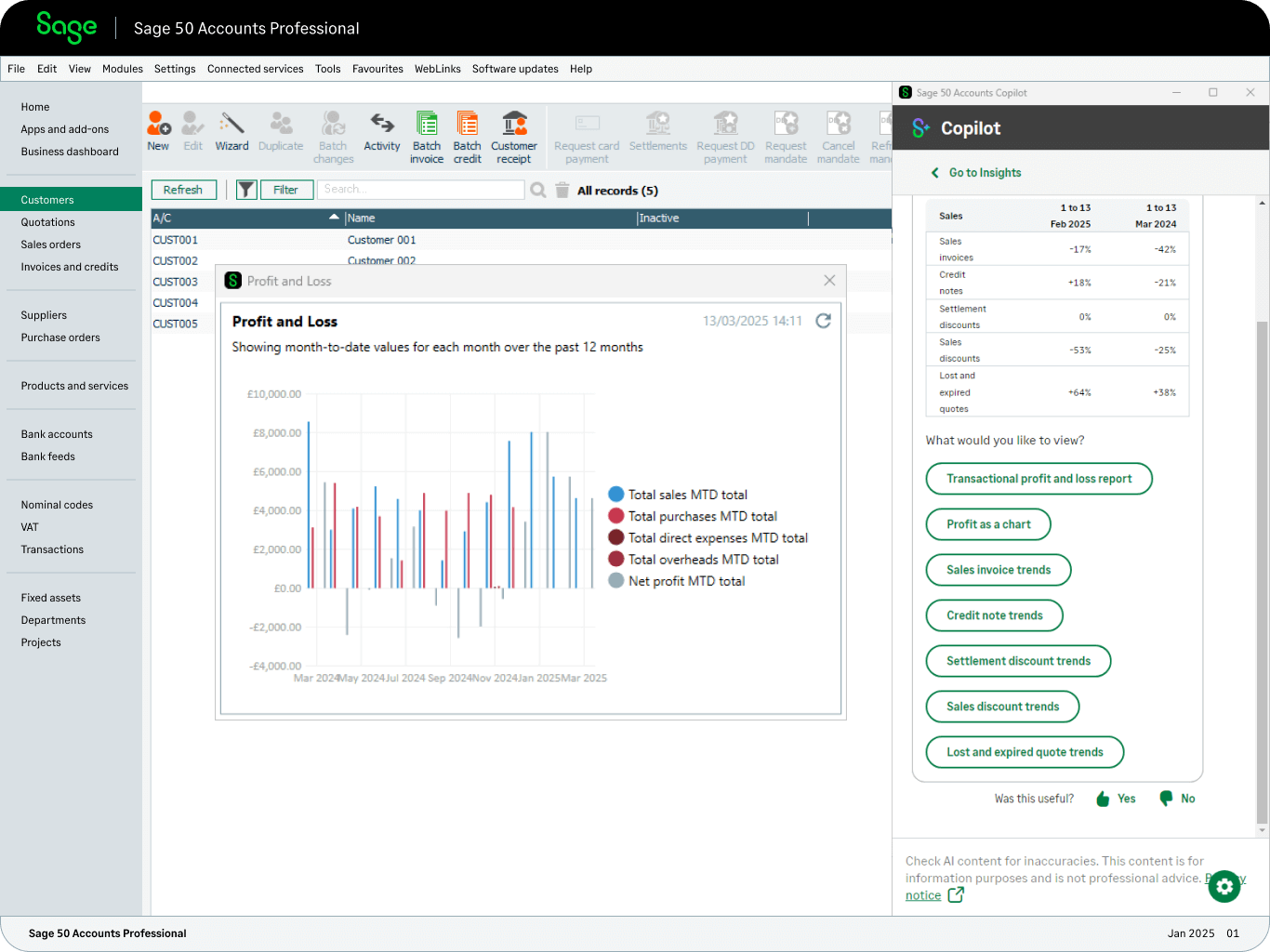
What makes Sage so good?
- Widely used system with a long-standing market presence
- Solid accounting and payroll modules
- Good adaptation to legal requirements in CH, DE, and AT
- Entry with Sage 50 possible, later upgrade to Sage 200
- Local support and training available
Who is it suitable for?
Sage is ideal for smaller Swiss companies that want to start with an established solution and grow later — especially for traditional industries such as fiduciary, trades, or retail.
Proffix
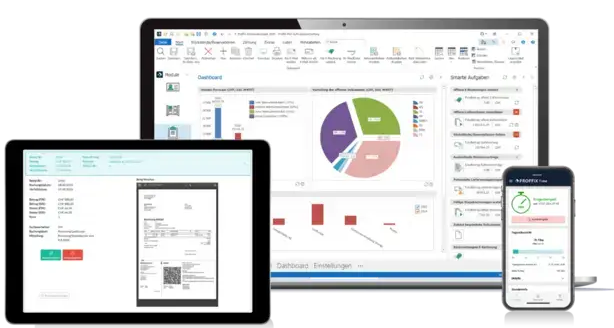
Proffix is an ERP software developed in Switzerland, specifically tailored to the needs of local SMEs. It covers essential business processes such as finance, payroll, order processing, and CRM.
What makes Proffix so good?
- Functions consistently tailored to Swiss SMEs
- Easy to use with quick onboarding
- Strong support for regional requirements (e.g., QR invoices, VAT, Swissdec)
- Local support through a Swiss partner network
- Affordable licensing model with transparent costs
Who is it suitable for?
Proffix is ideal for Swiss small and medium-sized businesses looking for a locally rooted ERP solution with easy handling and high legal compliance — such as those in the service sector, retail, or smaller manufacturing companies.
Typical Challenges for SMEs — and How ERP Systems Solve Them
Growing companies often find themselves operationally off-balance when workflows, data, and systems fail to keep pace with growth. ERP systems are designed precisely for this: they create structure, reduce sources of error, and enable sustainable efficiency. Below, we present five typical challenges and how an ERP can concretely address them.
Unstructured or Duplicate Data
When different departments work with their own lists and tools, redundancies, version conflicts, and unclear responsibilities quickly arise. Information is maintained multiple times, diverges, or is not up to date. An ERP system creates a unified data foundation that all departments can access centrally. Data is maintained consistently and is available across departments in real time — a prerequisite for reliable analyses and well-founded decisions.
Manual Processes and Inefficiencies
Many SMEs still rely on manual processes in their day-to-day operations: receipts are created by hand, inventory movements are tracked in Excel, and approvals run via email. These workflows are error-prone, time-consuming, and difficult to scale. With an ERP system, routine processes can be automated and converted into logical workflows. This not only saves time but also reduces errors and relieves employees, allowing them to focus more on value-adding activities.
Lack of Transparency Between Departments
When each department works with its own tools, the big picture is often missing. Sales, procurement, accounting, and management operate on different information levels. Decisions are then based not on real-time data but on assumptions. An ERP system connects all core areas of a company in a central system. This creates end-to-end data flows, unified reporting, and complete transparency — including for management. Processes become traceable, dependencies visible, and response times shorter.
Difficult Scaling and Limited Expandability
Growth brings new requirements: more customers, new products, additional processes. Without centralized management, many SMEs quickly reach their limits. Manual workflows, limited tools, and unclear responsibilities make the introduction of new business models or product lines unnecessarily complex. A modern ERP system is modularly structured and grows with the company. New modules can be integrated step by step, and processes can be standardized and scaled without overburdening existing structures.
Errors in Accounting and Compliance
Especially in highly regulated markets like Switzerland, accounting errors or missing documentation are more than just an annoyance — they can have serious financial and legal consequences. VAT requirements, QR invoices, payroll processing according to Swissdec standards, or data protection regulations must be correctly implemented at all times. ERP systems map these requirements in a standardized way: they automatically guide users through legally compliant processes, provide audit-proof documentation, and create a reliable foundation for audits, annual financial statements, and internal controls.
Trends and Developments in the ERP Market
Digital transformation is fundamentally changing the requirements for business software in the SME sector as well. More and more companies are questioning existing structures, outdated tools, and fragmented data sources, recognizing that a modern ERP system becomes the strategic foundation for growth, efficiency, and manageability. At the same time, the ERP market itself is also evolving: new technologies, legal requirements, and regional demands are leading companies to redefine their selection criteria.
Cloud ERP Is Becoming the New Standard
More and more small and medium-sized enterprises are adopting cloud-based ERP solutions. The advantages are clear: lower initial investments, no complex local infrastructure, and significantly faster implementation. Software-as-a-Service models enable not only greater flexibility but also make cost planning more transparent. For growing companies, it is particularly important that systems can be quickly adapted to new requirements without overwhelming internal IT resources.
Data Protection Requires Local Compliance
With the GDPR and the revised Swiss Data Protection Act (revDSG), the requirements for handling personal data have increased significantly. Companies must be able to demonstrate at any time where and how data is stored, processed, and protected. Modern ERP systems support this process through features such as access controls, audit-proof logging, and defined data flows. Particularly important for Swiss SMEs: the systems must not only meet EU standards but also take national specificities into account — from data storage to the processing of sensitive employee data.
Local Partner Networks Are Gaining Importance
An ERP system only achieves its full potential when it is successfully implemented, customized, and further developed. Especially in Switzerland and the DACH region, it is evident how crucial local expertise is for project success. ERP providers are therefore specifically investing in partner networks — such as specialized consultancies or integrators who are familiar with local business processes, legal frameworks, and language requirements. For SMEs, this means shorter implementation times, better support, and more security during customizations.
Demand for Localized Finance and Payroll Functions
An ERP system that does not meet the specific requirements for accounting and payroll processing is not an option for many SMEs. In Switzerland in particular, companies expect features such as QR invoices, correct VAT processing, Swiss GAAP-compliant accounting, and Swissdec connectivity. Support for multiple currencies, especially CHF and EUR, is also essential for many companies operating across borders. Systems that do not cover these requirements are often eliminated early in the selection process.
Mobility and Location-Independent Access
Hybrid working and mobile teams have long been a reality. ERP systems must therefore deliver more than just functioning in the office. Expected are mobile apps, browser-based interfaces, and role-based access concepts that enable secure and complete access to central company data even on the go. Whether in the warehouse, during a client meeting, or working from home — the systems must be responsive, intuitive to use, and seamlessly synchronized.
A Smart Path to Growth
For many small and medium-sized enterprises, growth is not just a matter of sales but also of structure. As soon as processes become more complex, new markets are entered, or additional product lines are introduced, the internal organization determines how efficiently and scalably this growth succeeds. This is precisely where modern ERP systems unlock their strategic potential.
By unifying workflows, centralizing data, and placing decisions on a reliable information foundation, ERP platforms create the basis for sustainable development. It's not about an IT project — it's about a genuine structural advantage with a direct impact on efficiency, transparency, and future readiness.
Among the available solutions, Odoo stands out in particular: through its modular architecture, comparatively low entry price, and strong local adaptability. Swiss companies benefit not only from features like QR invoicing or VAT compliance but also from an active network of local implementation partners that ensures support, training, and individual consulting.
W4 — Your ERP Partner
An ERP system only reaches its full potential when it fits the processes, culture, and pace of a company. This is exactly where W4 comes in. As an Odoo partner agency with many years of project experience, we support SMEs in Switzerland and the DACH region from analysis to implementation — with technological expertise, local knowledge, and a clear understanding of business reality.